Motorcycle Green-Laning for Beginners: What It Is (And What It Definitely Isn’t)
Motorcycle Green-Laning for Beginners: What It Is (And What It Definitely Isn’t)
So, you’ve heard the term green-laning, seen a few muddy bikes on Instagram, and thought: “That looks like a laugh… I fancy a bit of that.” Good news – you’re in the right place.
Green-laning is one of the most accessible, rewarding, and misunderstood types of motorcycling in the UK. It’s not racing, it’s not smashing about fields, and it’s definitely not an excuse to pretend you’re on the Dakar Rally while upsetting half the countryside.
This guide is aimed squarely at UK riders at the very beginning of their green-laning journey. No prior off-road experience needed. No jargon. No judgement. Just the basics – explained properly – so you can get started the right way.
So… What Is Green-Laning?
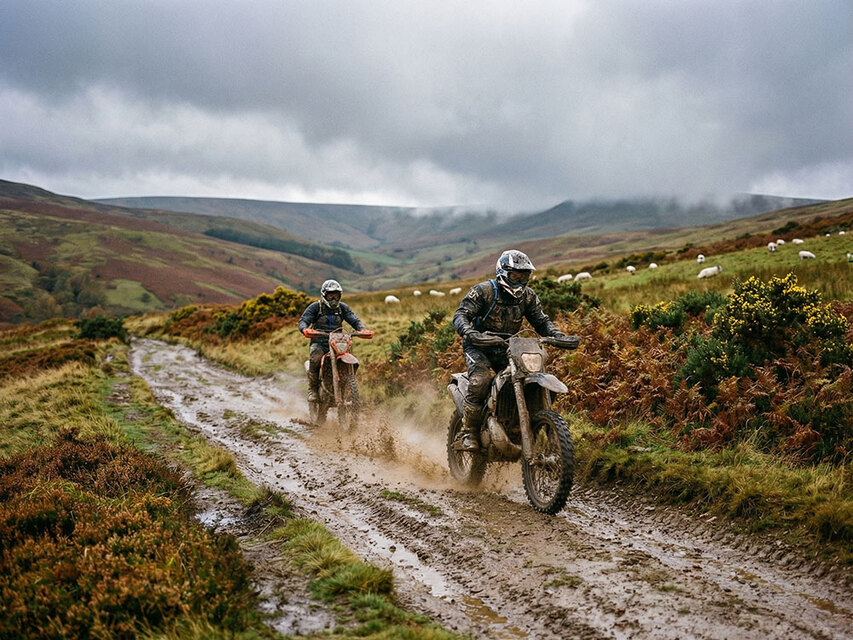
In simple terms, green-laning is riding a road-legal motorcycle on unsurfaced public roads. These are lanes that often look like dirt tracks, farm roads, or muddy paths – but legally, they’re still highways.
That last bit is important, so we’ll say it again for the folks at the back:
Green lanes are public roads.
They’re just not tarmac. No white lines. No kerbs. No potholes filled in by the council (you get ruts instead – luxury).
Because they’re public highways, you need:
- A road-legal, taxed, MOT’d motorcycle
- Insurance
- A legal exhaust (sorry, ear-bleeders)
- A number plate
If it wouldn’t pass a polite chat with a traffic officer on a B-road, it probably doesn’t belong on a green lane either.
What Green-Laning Is NOT
Let’s clear up a few common misconceptions early – because this is where people get into trouble.
❌ It’s Not Motocross
No jumps. No berms. No roosting your mates for fun. Green-laning is about control, balance, and patience – not airtime.
❌ It’s Not Enduro Racing
You’re not racing the clock, the terrain, or your mate Dave on his brand-new bike. Green lanes are shared spaces, not special stages.
❌ It’s Not “Riding Anywhere That Looks Like a Track”
This one catches a lot of beginners out. Just because it looks like a lane, doesn’t mean it’s legal. Fields, footpaths, bridleways, and private tracks are all a big no-no unless you have explicit permission.
Getting this wrong doesn’t just land you in hot water – it risks lanes being closed for everyone. And nobody wants to be that rider.
The Different Types of Green Lanes (UK Explained)
UK rights of way can feel like alphabet soup at first, so here’s a beginner-friendly breakdown of the ones that matter.
BOATs (Byways Open to All Traffic)
These are the gold standard for green-laning. If a lane is marked as a BOAT, motor vehicles are legally allowed.
They’re often signed, sometimes maintained, and can range from gravel tracks to properly muddy challenges depending on weather and use.
UCRs (Unclassified County Roads)
UCRs are public highways that the council hasn’t bothered to fully classify. Many green lanes fall into this category.
They’re legal to ride – but often unsigned – which is why proper map reading and research is so important (we’ll cover that in a later article).
Bridleways & Footpaths
Short version? Motorcycles are not allowed.
Even if it looks perfect. Even if someone told you it was fine. Even if you’ve seen bikes on it before. Riding these is illegal and damages the reputation of green-laners everywhere.
If in doubt: don’t ride it.
Why Etiquette Matters (More Than Skill)
You don’t need amazing bike control to be a good green-laner – but you do need a decent attitude.
Green lanes are shared with:
- Walkers
- Horse riders
- Cyclists
- Farmers and landowners
How we behave directly affects whether lanes stay open. That means slowing right down, killing engines when needed, being polite, and not riding like you’re late for the pub.
A friendly wave and a bit of patience go a long way. So does not revving the nuts off your bike next to a horse — they tend to frown on that.
Why Green-Laning Is Brilliant for Beginners
Despite all the rules and responsibilities, green-laning is an absolutely cracking way to ride.
- You don’t need big speeds to have fun
- It builds confidence and bike control
- You get properly off the beaten track
- Every ride feels like a mini adventure
It’s also incredibly social. Most green-laners are more than happy to help beginners, share routes, offer advice, and laugh with you when you gently lay the bike down in a puddle.
(We’ve all been there. If anyone says they haven’t, they’re lying.)
Coming Up Next…
Now that you know what green-laning actually is – and what it isn’t – the next big question is obvious:
Is your bike actually suitable or do you need to buy something specifically?
In the next article, we’ll look at what makes a good beginner green-laning bike, whether you really need a lightweight off-roader, and why “adventure bike” doesn’t always mean what the marketing department thinks it does.
Stick around – we talk bikes, bodges, and biscuits.