TT Sidecar Review: Class Can Return, But Not As It Was
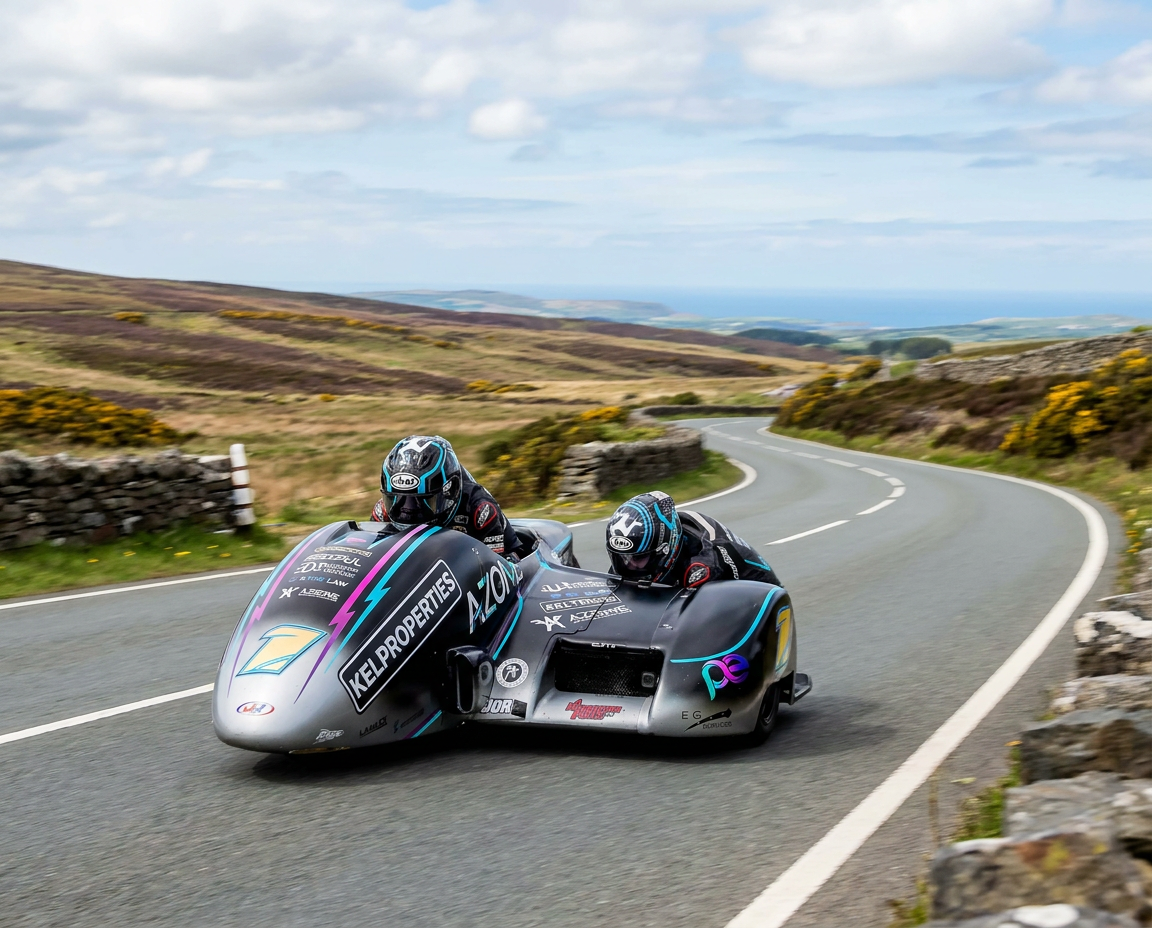
The Isle of Man TT has published the first-stage findings of its Sidecar Sustainability Review, and the headline is this: the class has a future, but the outfits that come back will be slower, tighter-controlled and built to a different set of rules. Nobody is pretending otherwise.
Two months on from the suspension of Sidecar racing at TT 2026, the Isle of Man TT Races has published the First-Stage Report of its Sidecar Sustainability Review. It landed on 31 July, hitting the deadline organisers set back in June, and it does something press releases of this kind usually swerve: it says plainly that the class cannot simply pick up where it left off.
What the review actually found
The evidence-gathering phase pulled in more than 460 public submissions, alongside dedicated panels made up of competitors, technical specialists and people from inside the race organisation. That is a serious volume of feedback for a single class at a single meeting, and it tells you how much the sidecar paddock and the fans who follow it care about the outcome.
Two conclusions come out of it. First, there is strong support for keeping Sidecars at the TT. Second, there is broad agreement that returning the class in its previous form is not on the table. Those two things sit together more comfortably than you might expect. The people closest to the class appear to have accepted that something has to change.
Crucially, the report concludes there is a credible route back through a phased programme of reform. Not a date. Not a guarantee. A pathway.
The bit that will start arguments
Buried in the recommendations is a phrase that will be picked over in every paddock, café and comments section between now and 2027: reducing overall performance.
The proposed initial package covers exactly that, plus stronger technical controls, improved chassis assurance, tighter scrutineering and competitor standards, and a rewrite of the technical regulations. Running alongside it, a longer-term engineering programme will look at aerodynamics, chassis development and future technical concepts.
Read that list properly and you can see the shape of the thing. Modern F2 outfits have got extremely quick, extremely aerodynamic and extremely committed around a 37.73-mile public road circuit. The review is not proposing to tinker at the edges of that. It is proposing to wind the performance envelope back and put far more scrutiny on what gets to the start line and who is driving it.
Some people will read that as neutering the class. Others will point out that a slower sidecar race is a sidecar race, and no sidecar race is nothing at all. Both arguments are honest ones. We’d take the former.
Why the class was suspended
For anyone who missed the fortnight, Sidecar competition was pulled from TT 2026 on safety grounds after a run of serious incidents in qualifying.
Maria Costello MBE and passenger Shaun Parker crashed at Brandish after striking a hare at high speed. Costello sustained life-changing injuries and remains in hospital undergoing rehabilitation, with a fundraiser set up to cover the adaptations and specialist care she now needs. Four-time race winners and current lap record holders Ryan and Callum Crowe were involved in a separate heavy crash at Crosby during the third qualifying session. Following those incidents, organisers suspended the class for the remainder of the event.
The knock-on reached the Billown Course too. The Southern 100 removed modern F2 outfits from its 2026 meeting, describing it as a temporary pause while regulations are examined, and ran a Classic Sidecar class as a contingency. Organisers there have said they remain committed to modern sidecar racing with hopes of reintroduction in 2027.
What happens next
The review recommends setting up a Technical Development Group to take the work forward, with ongoing consultation involving competitors, constructors, the Auto Cycle Union and the wider sidecar racing community.
Clerk of the Course Gary Thompson MBE, BEM framed the exercise as understanding the challenges rather than delivering a verdict, noting that the evidence gathered was extensive and, more tellingly, consistent. He described the report as “the end of the first stage” rather than the end of the process, with attention now turning to building a reform package that can be delivered in a workable timeframe.
Note what is not in the document: a return date. There is no commitment to Sidecars appearing at TT 2027, which runs 31 May to 12 June. Getting a rewritten technical rulebook agreed, communicated and then physically built into existing outfits is not a winter job for most teams, and constructors will need lead time before anyone can realistically enter under new regulations.
Our take
This could have been a stitch-up in either direction. It could have quietly buried the class, or it could have waved everyone back on with a few extra scrutineering forms and hoped for the best. It has done neither, and the report reads like something written by people who actually went and asked.
460-plus submissions and a stated willingness to reduce performance suggests the sidecar community itself pushed for change rather than having it done to them. That matters. Reform that comes from the paddock tends to stick. Reform imposed on it tends to get argued about for a decade.
The Technical Development Group is where this gets real. Words on a PDF are free. Rewritten regulations that constructors can build to, that competitors can afford, and that genuinely change the numbers are a much harder job. That is the one to watch.
The First-Stage Report is published in full on the official Isle of Man TT website.
Sidecars, solos, short circuits or a Sunday bike night. Whatever you’re chasing, find out what’s on near you.