How to Check and Maintain Your Motorcycle’s Wheels and Tyres
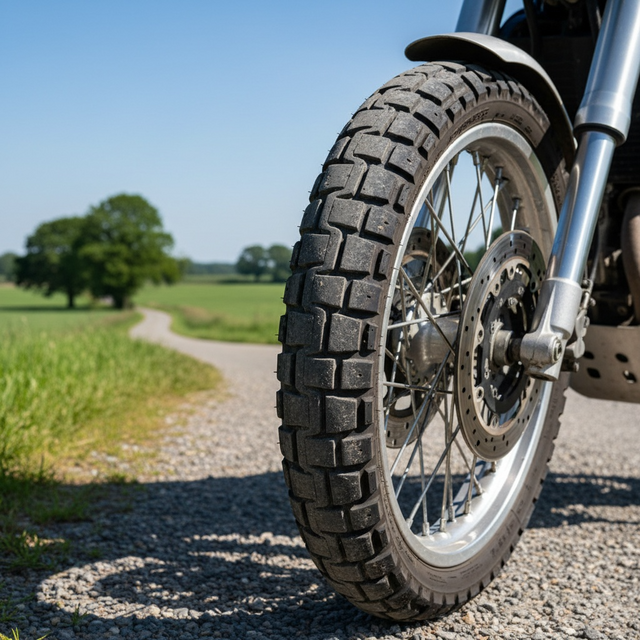
Your wheels and tyres are where the rubber meets the road – literally. Whether you're carving up country lanes, hooning around a track, or cruising to your favourite greasy spoon, looking after your wheels and tyres is key to staying safe and getting the most out of every ride.
Here’s a straightforward, no-faff guide to keeping them in top nick – so you can spend more time riding, and less time scratching your head in the garage.
1. Tyre Pressure: Check Before Every Ride
It might sound basic, but tyre pressure is a biggie. Under-inflated tyres feel squishy and vague, wear out faster, and can mess with your handling. Over-inflated? You’ll feel every pebble on the road and lose grip in the corners.
- How to check: Use a good quality tyre pressure gauge (they're cheap and dead handy). Your owner’s manual or a quick search online will tell you the ideal PSI for your bike – front and rear are usually different.
- Top tip: Always check pressures when the tyres are cold, ideally before you set off.
2. Tread Depth: Grip It and Rip It (Safely)
Worn tyres lose grip – especially in the wet – and could land you in trouble with the law or worse, a ditch.
- Minimum legal depth: In the UK, it’s 1mm across three-quarters of the tread width (and visible tread on the rest). But we’d say change them well before that.
- Look for wear bars: Those little raised bits in the grooves? If they’re level with the tread, it’s time for a new hoop.
3. Check for Damage and Cracks
Give your tyres a proper once-over every few rides. Look for:
- Cuts, bulges or embedded objects (nails, glass, etc.)
- Cracks or dry rot (especially on older tyres)
- Uneven wear (could mean alignment or suspension issues)
4. Wheel Inspection: Spin to Win
Give both wheels a spin (on a stand if you’ve got one) and watch for:
- Wobbles or warping: Could point to a buckled rim – especially if you’ve hit a pothole recently.
- Cracks or corrosion: Particularly on older or cast wheels.
- Spoke tension (for spoked wheels): Tap them gently – they should all sound roughly the same. A dull ‘thunk’ means a loose spoke.
5. Wheel Bearings: Feel for Free Play
Grab the top and bottom of the wheel and rock it side to side.
- If it moves or clicks: You might have worn bearings – time for a swap.
- Smoothness: When spinning the wheel, it should feel smooth and quiet. Grinding = bad news.
6. Balancing and Alignment: Keep It Steady
- Tyre balancing: If you feel vibrations through the bars at speed, your wheels might need balancing. Get it checked when you fit new tyres.
- Alignment: Chain out of line? Your rear wheel might be misaligned. Use alignment marks or a straight edge to check.
7. Tyre Age: Not Just the Tread
Even if your tyres look fine, rubber goes off over time.
- 5 years or older? Start thinking about changing them, especially if your bike’s been sat in a shed.
- Check the DOT code: It’s stamped on the sidewall – the last four digits show the week and year the tyre was made (e.g. 2319 = week 23 of 2019).
Final Thoughts: Keep It Rolling
Looking after your wheels and tyres isn’t just about safety – it’s about squeezing every last bit of fun out of your ride. A well-shod bike handles better, feels sharper, and gives you the confidence to lean in and enjoy the ride.
Got a favourite tyre brand or a horror story involving a pothole and a bent rim? Stick around – we talk bikes, bodges, and biscuits.